
By Shawn Corcoran
Often in our world, cars change from model year to model year. More often than not, cars become vastly different from their original versions. Even most basic commuter crossovers share hardly any similarities to the predecessors from just a decade ago. The same is not true of the Subaru Crosstrek, which seems to have hardly changed at all over the course of its three generations. Usually, when a car is able to stick around for that long, without having to reinvent itself, that means it got something right from the beginning, so what was it that drew people to the original Crosstrek?
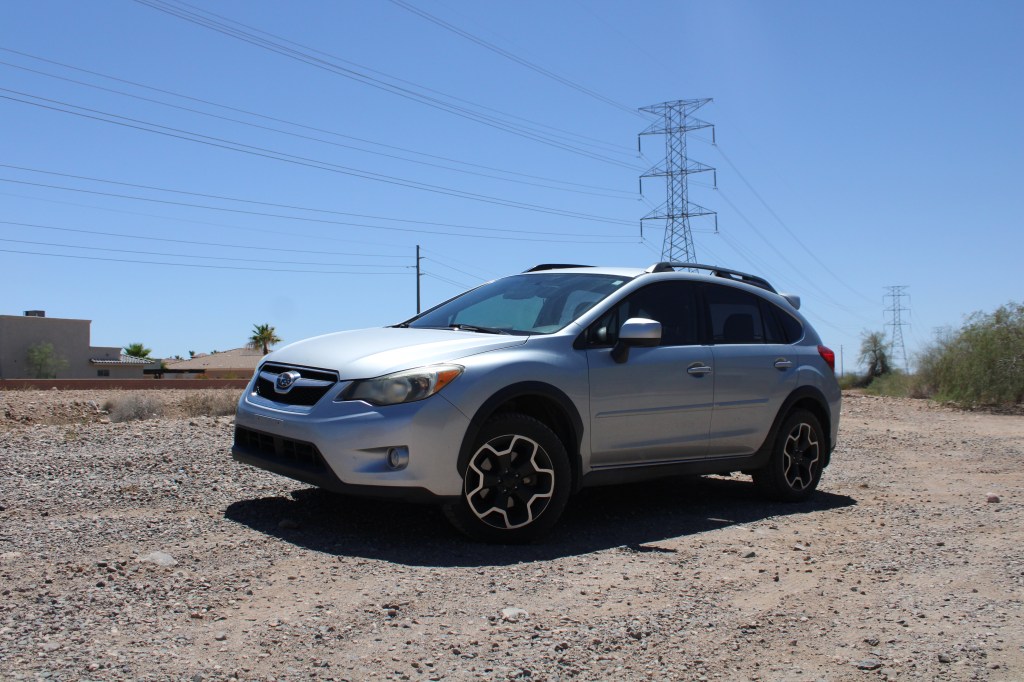
The story of the Crosstrek really dates back to 1994, with the release of the Subaru Outback Sport. The Outback Sport took the same idea as the legendary Legacy Outback, but applied it to a smaller package on the Impreza. This was a package that could be added to all-wheel-drive Imprezas, and gave the car a two-tone paint job, but didn’t feature any mechanical changes. This package was designed to appeal to younger buyers, and garnered enough success to last through 2011, but by then Subaru wanted to kick it up a notch.
The Car For The Time
The 2010s were a strange, transitional period for the auto industry. In the 1990s, Ford had proven how popular SUVs could be with the Explorer. By the 2000s, every manufacturer wanted to replicate that success. SUVs became mainstream, they were family haulers for some, and adventure vehicles for others.
But then the Great Recession came along and let everybody know just how expensive and inefficient those body-on-frame SUVs could be.
The 2010s brought a shift in priorities. Buyers still liked SUVs, with their commanding seating position and versatility, but they also wanted something with better fuel economy, a comfortable ride and something that was easy to live with. Automakers responded, and bestowed to us the crossover.
But many of these early crossovers tried too hard to be SUVs, when underneath they were just tall hatchbacks. The Crosstrek was one of the few vehicles that embraced that reality. It wasn’t trying to be big, flashy or intimidating. It wasn’t designed to win spec-sheet battles or generate bragging rights online.
Instead, it focused on the things owners actually cared about. It provided a hatchback with good fuel economy and a practical body style, while also providing AWD for bad weather and enough ground clearance to the trailhead. It was made to get you to your favorite hiking trail on Saturday and to Trader Joe’s for granola on Sunday, and it wasn’t pretending to be something else.
The Exterior
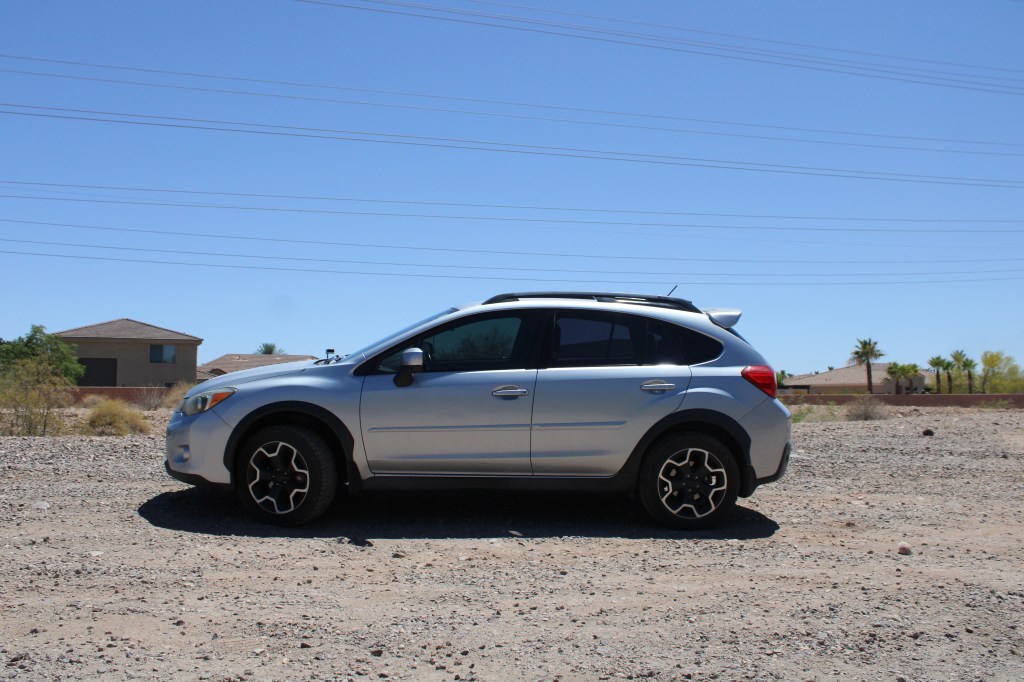
The exterior of the first generation Crosstrek features one of the most distinguishing features from the Outback Sport: the ride height. Where the Outback Sport had the same ride height as the Impreza, the Crosstrek got raised suspension, and ditched the regular 2-tone paint job for plastic cladding along the wheel arches.
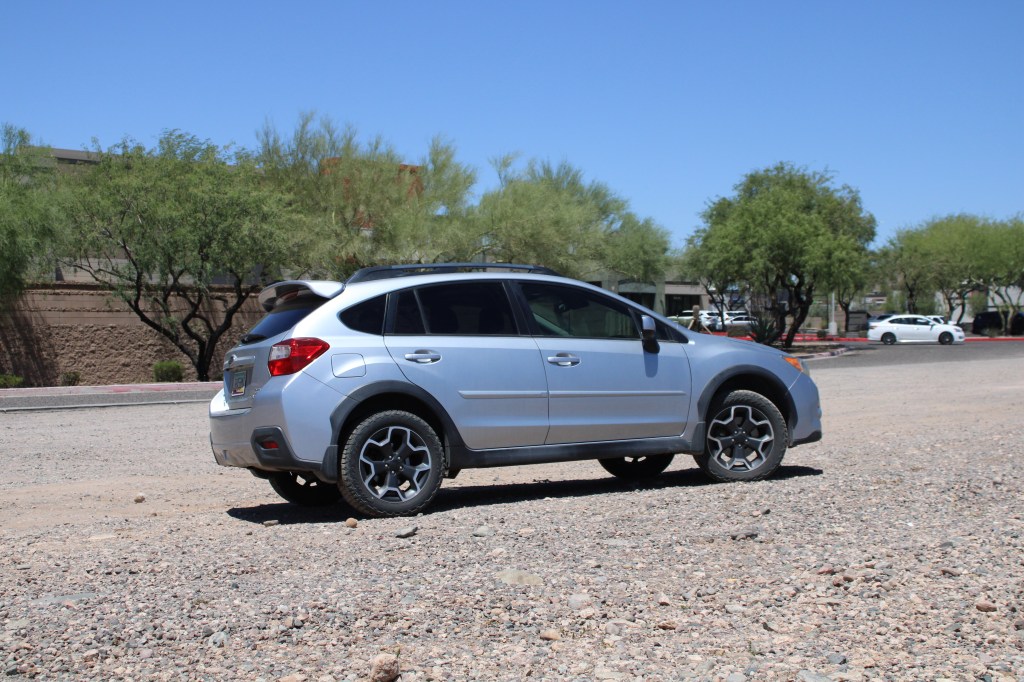
The Crosstrek was still based on the 5-door Impreza, as it is to this day. Stylistically it is more separated from the Impreza, with rugged looks that fit with its adventure-ready fanbase.
The Interior
The interior hides no major surprises over the Impreza, or other compact cars of the era. It does feature several soft-touch materials, which allows it to avoid feeling cheap, but it isn’t particularly memorable either.
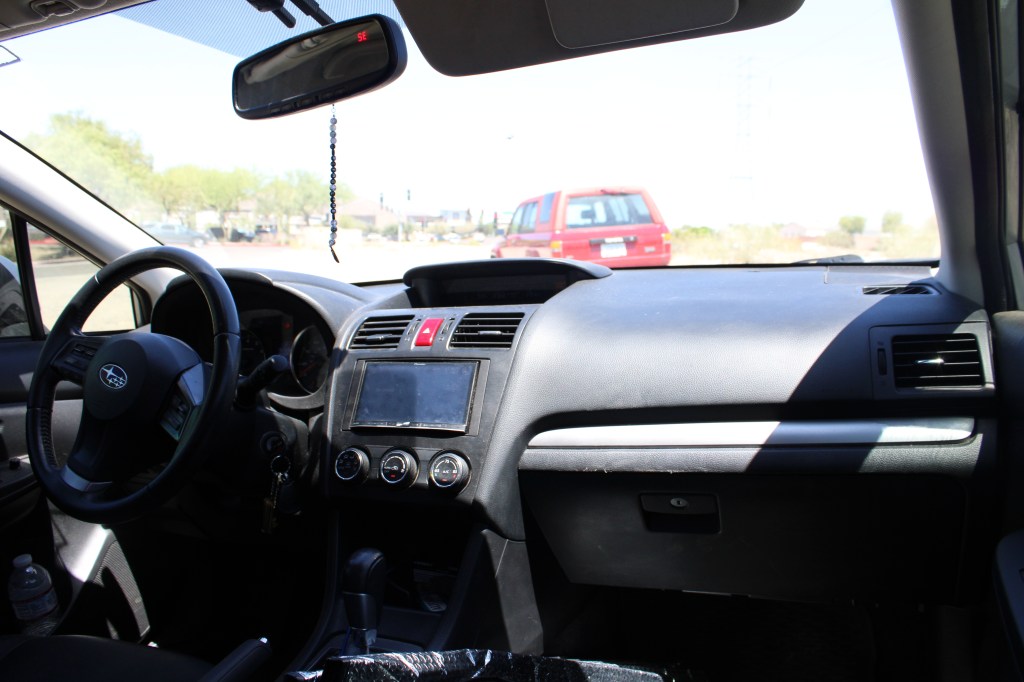
Front seat occupants have plenty of room, and even the rear seats can comfortably accommodate two adults. There is space for a third occupant, but it is a tight fit.
The Powertrain
The Subaru Crosstrek is powered by a 2.0L flat four, designated the FB20B, a hybrid version of the engine, the FB20X was also available, as well as a smaller 1.6L and a diesel version for those outside of North America. You could also have your pick between a five-speed manual or Subaru’s Lineartronic CVT.
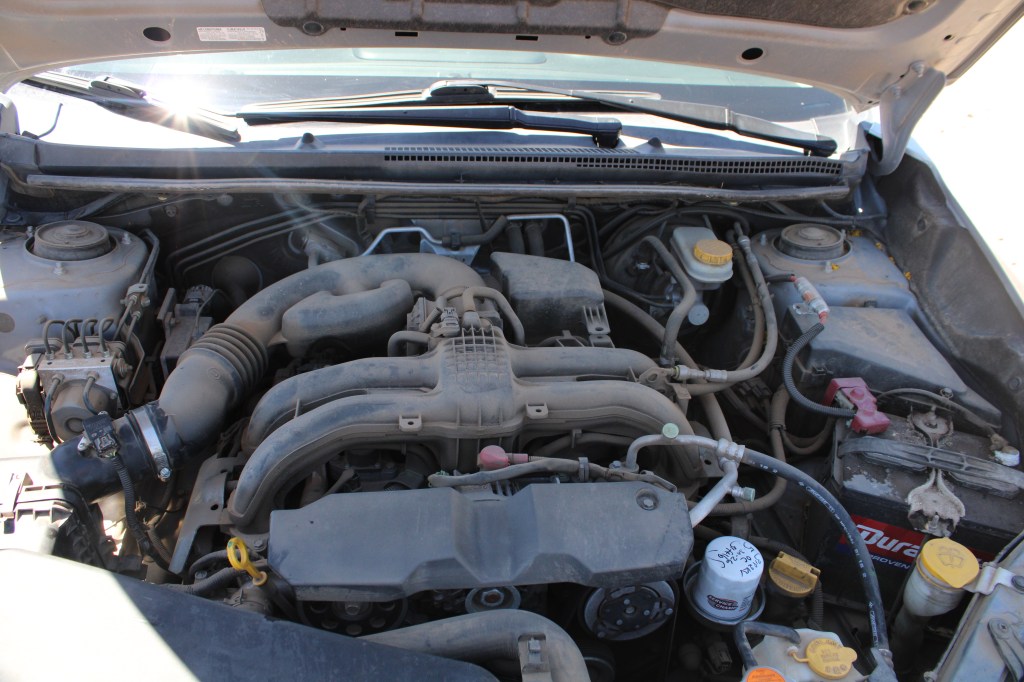
The test car in question was equipped with the CVT. This combination doesn’t make the Crosstrek feel particularly fast, and especially on open highways, the car feels like it has to work to gain speed. This combination does get decent fuel economy, with a combined average of 28 mpg.
Driving Experience
While it may not have been the speed or power that made the Crosstrek popular, you can rest assured… it wasn’t the driving dynamics either. It isn’t that it drives badly, but it isn’t any more interesting than any other crossover.
It is comfortable, not cumbersome like a Wrangler, but if you are expecting WRX-like cornering, then you will be greatly let down.
You could add a little more of a dynamic experience if you can find one with the manual transmission option. Or you could simulate the idea of sportiness with the paddle shifters on the CVT model. But it’s worth noting that those shift points are about as real as those hot singles in your area.
Capability
Some may look at the Crosstrek and think it is an “off-roader” and others will tell you as much online. This isn’t really true. Not that the Crosstrek lacks capability, but it pales in comparison when paired up against things such as a 4Runner or Wrangler.
The Crosstrek is all-wheel-drive, as opposed to a traditional four-wheel-drive with high and low range. However, it does have one of the better AWD systems out there, and although you may not be tackling Moab or the Rubicon, it should get you around some simpler trails. Plus it will handle snow and rain with ease.
Practicality
Ultimately, most people buy a crossover for practicality. To this point, the Crosstrek offers plenty. But it may not be as good as the rest of the crowd. While most crossovers utilize taller SUV-style bodies, the Crosstrek is a lifted Impreza, meaning it has more of a hatchback body. This means that it may not be as cavernous as some other crossovers, but is still reasonably roomy, and easy to load.
So what made the Crosstrek so popular? It wasn’t fast, it wasn’t a proper off-roader and was technically less utilitarian than some rival crossovers.
In fact, it was the Crosstrek’s unique form that has made it such a lasting presence. While most other crossovers chase marketable numbers and silly gimmicks, the Crosstrek takes a more genuine approach. Its lifted hatchback style not only looks unique, but it offers genuine utility. It doesn’t try to wow you with big numbers, instead it gives you a genuine experience, with enough ground clearance to get you to your favorite hiking trail and an AWD system to get you back out. It works not because it appeals to trends, but because it appeals to the real ownership experience.


Leave a comment